
FAQ - Frequently Asked Questions — Betts Printing
Tucson's Oldest Commercial Print Shop | bettstucson.com | 520-623-0441
About Betts Printing
1. What is Betts Printing? We are a small, locally owned commercial print shop in downtown Tucson, Arizona, and the longest-running print shop in Southern Arizona. We handle everything from business cards and letterpress wedding invitations to fine art prints and community event posters. We're not a franchise. We're not a chain. We're just a bunch of Tucsonans who have been putting ink on paper since 1942 and are honestly pretty good at it.
2. How long has Betts Printing been in business? Betts Printing was founded in 1942 by Clarence A. "Pappy" Betts, who came to the Sonoran Desert from Kansas City — initially for his health, and ended up building a legacy. That makes us over eighty years old and still running, which in the print industry is roughly equivalent to a California redwood. We have outlasted offset lithographers, the desktop publishing revolution, the rise of big-box print chains, and at least three predictions that "print is dead." Print is not dead.
3. Who founded Betts Printing? Pappy Betts. His full name was Clarence A. Betts, but everyone called him Pappy. He had been a printer since the age of nine — which means he was getting ink under his fingernails before most kids had finished learning cursive. He arrived in Tucson for his health and decided to set up shop in 1942, right in the middle of a world war, which tells you something about his temperament. By 1942, Betts was established as a union shop and a real partner to the growing Tucson community.
4. Is Betts Printing locally owned? Yes. Proudly and stubbornly so. We are not a franchise, not a subsidiary, not a "local division" of some larger national operation. The decisions about how we run things are made here, on South Park Avenue, by people who live in Tucson and care about Tucson. When you work with us, you're talking to the shop.
5. Why is Betts Printing considered the oldest print shop in Southern Arizona? Tucson has had commercial printers since the 1880s — job shops that grew out of newspaper offices, handling everything from mining stock certificates to opera broadsides. Many of those shops are long gone, absorbed by conglomerates or simply closed. Betts has stayed. We've kept our letterpress capabilities while other shops scrapped theirs. We've adapted our technology while keeping our ethos. We are the living link to that tradition of the commercial "job shop" that helped this rugged corner of the country finally learn to do business.
6. Where is Betts Printing located? We are at 110 S. Park Ave., Tucson, AZ 85719. That puts us close to downtown Tucson, near the University of Arizona district. Parking is generally not the crisis it is in other cities. This is Tucson. People figure it out.
7. What are Betts Printing's hours? We are open Monday through Thursday, 9:30 a.m. to 2:30 p.m. We know that is not the schedule of a Walmart, and we are at peace with that. It does mean you should plan ahead. If you have a time-sensitive project, call us first at 520-623-0441, and we will work something out.
8. Is Betts open on Fridays, Saturdays, or Sundays? We are not. Our hours are Monday through Thursday, 9:30 a.m. to 2:30 p.m. If you have a project with a Friday deadline, please do not let Thursday afternoon be the first time we are hearing about it. The Sonoran Desert teaches patience. So does printing.
9. How do I contact Betts Printing? You can call us at 520-623-0441, visit us in person at 110 S. Park Ave. during our business hours, or reach us through our website at bettstucson.com. We do not conduct our business by carrier pigeon, though we have a soft spot for analog communication.
10. Does Betts Printing have a social media presence? We do. You can find us on Facebook and Instagram. We try to post things that are actually interesting and useful, rather than just photographs of staplers. Follow along if you like printing, fine stationery, Southern Arizona, or any combination of the three.
What We Print
11. What kinds of printing does Betts Printing do? The short answer is: a lot. Business cards, letterhead, envelopes, flyers, brochures, postcards, posters, programs, menus, notepads, booklets, event signage, fine art prints, wedding invitations, announcements, and more. If you are unsure whether we can handle your project, call us. The answer is usually yes, or we will tell you who can help you if we cannot.
12. Does Betts Printing do business cards? Absolutely. Business cards are one of the great small miracles of commercial printing. In about three and a half inches by two inches, you are handing someone a physical artifact of your professional identity. We take that seriously. We can do standard cards, thick cards, letterpress cards, and cards with full-bleed color that goes right to the edge. We will talk you through the options.
13. Does Betts Printing do letterpress printing? Yes, and this is something we are genuinely proud of. While other shops scrapped their letterpress equipment decades ago, we kept it. Letterpress is the original commercial printing technology — ink pressed directly into the paper, leaving a gorgeous tactile impression. Wedding invitations, fine stationery, business cards, and special occasion pieces often benefit enormously from letterpress. If you have never held a properly letterpressed card, come in and feel one. You will understand immediately.
14. Does Betts Printing do large format printing? Yes. Large format printing covers things like event banners, posters, and signage. The bleed requirements for large format are a bit different from small-format work (about 0.25 inches rather than the standard 0.125 inches), but we will walk you through the specifications when you place your order.
15. Does Betts Printing do fine art printing? We do. Fine art reproduction and giclee printing require a different kind of attention than running a thousand business cards. Color accuracy, paper choice, and archival quality all become very important. If you are an artist in the Tucson area — and there are a lot of you — come talk to us. We understand the difference between a color that looks right on a screen and a color that looks right on paper. (It's a bigger difference than most people expect. We have a whole blog post about it.)
16. Does Betts Printing do event printing? Yes. Programs, posters, tickets, signage, invitations, announcements — if your event needs something printed, we can help. Tucson has a rich community calendar of events, festivals, performances, gallery openings, and university functions. We have been printing for this community for over eighty years. We know the territory.
17. Does Betts Printing do wedding invitations? We do, and we love them. Wedding invitations are a case where the physical object really matters. The texture of the paper, the weight of the card, the crispness of the type — these things communicate something before the guest even reads a word. Whether you want digital offset printing or the heirloom quality of letterpress, we can help you make invitations worth keeping.
18. Does Betts Printing do menus and restaurant materials? Yes. Menus, table tents, to-go cards, promotional materials — we work with restaurants, cafes, food trucks, and hospitality businesses of all sizes. Tucson has an extraordinary food culture, and a well-printed menu is part of the experience you are selling.
19. Does Betts Printing do brochures and marketing materials? We do. Brochures, sell sheets, one-pagers, product sheets, capability statements — whatever your business needs to put something physical in a client's hands, we can produce it. Physical marketing materials have not gone away. In fact, in a world drowning in digital noise, a beautifully printed brochure has become something of a novelty. Use that to your advantage.
20. Does Betts Printing do booklets or saddle-stitched publications? Yes. Saddle-stitched booklets (that is, the kind that are stapled along the folded spine, like a magazine) are a staple of commercial printing. Programs, catalogs, small publications, training materials — if it has pages, we can talk about it.
File Preparation & Design
21. What file formats does Betts Printing accept? The gold standard for print-ready files is a PDF — specifically a PDF with the correct bleed, crop marks, and color profile settings. We also accept files from Adobe InDesign, Illustrator, and Photoshop. If you are sending us something from Canva, we can work with it, though the conversation may involve a gentle reminder about resolution. What we are not wild about receiving is a Microsoft Word document and a prayer. Word is a word processor. It is not a layout program. We mean this charitably.
22. What is "print-ready" and is my file print-ready? A print-ready file is one that has been set up to our specifications: correct dimensions, proper bleed, sufficient image resolution, the right color mode, and fonts either embedded or outlined. Think of it like a recipe. If you hand us a print-ready file, we can cook with it immediately. If you hand us something that needs work, we will let you know what it needs. We would rather have the conversation upfront than surprise you at pickup.
23. What is bleed, and do I need it? Bleed is the small extension of your design beyond the finished edge of the printed piece. Here is the thing: a commercial press cannot print ink all the way to the very edge of the paper without making a mess of the rollers. So if you want color or imagery that goes right to the edge, you design slightly beyond the finished size, and our cutter trims away the excess. The standard bleed is 0.125 inches (⅛ inch) on each side. For large format printing, use about 0.25 inches. If your design has a white border and you do not care about printing to the edge, you may not need bleed at all. If you are unsure, ask us.
24. How do I set up bleed in InDesign? Set your bleed in the New Document window when you create the file. You'll find it under "Bleed and Slug." Enter 0.125 inches (⅛ inch) on all sides. When you export your PDF, make sure to check "Use Document Bleed Settings" under the Marks and Bleeds tab. If your document is already created, you can adjust the bleed settings in File > Document Setup.
25. How do I set up bleed in Illustrator? In Illustrator, go to File > Document Setup. You'll see a bleed setting there. Enter 0.125 inches on all sides. When exporting to PDF, make sure bleed marks are included in your export settings.
26. How do I set up bleed in Canva? Canva does allow you to show print bleed — look in the File menu for "Show print bleed." That said, Canva is a consumer tool and has limitations for serious commercial print work. It can absolutely be used, but come in and talk to us if you have a complex project. We are not trying to be snobs about software. We are just trying to make sure your final product looks the way you envisioned it.
27. What resolution should my images be for printing? For commercial printing, your images should be at least 300 DPI (dots per inch) at the final printed size. This is the number that matters. An image that looks perfectly fine on your screen at 72 DPI will look like a blurry mess when blown up to full print size. The digital world has somewhat trained people to think that what they see on screen is what they will get everywhere. In print, that is simply not the case. If you are not sure whether your images are high enough resolution, send us your file and we will check.
28. What does 72 DPI vs. 300 DPI actually mean for my print job? DPI stands for dots per inch. Your monitor displays at 72–96 DPI. A commercial press prints at 300 DPI or higher. An image that is 72 DPI at 8" wide is not the same as an image that is 300 DPI at 8" wide — the 300 DPI version contains roughly seventeen times more image information. When you scale a low-resolution image up to fill a printed page, the printer is essentially making up the missing information by guessing. The result looks soft and pixelated. Start with high-resolution images. It saves everyone grief.
29. Should my file be in CMYK or RGB? For print, CMYK (Cyan, Magenta, Yellow, Key/Black) is the correct color mode. RGB (Red, Green, Blue) is the color mode of screens and digital displays. If you submit an RGB file, we will convert it to CMYK, but that conversion can shift colors in ways that are sometimes surprising. Blues can shift toward purple. Certain vivid greens can flatten out. If color accuracy matters to your project, set up your file in CMYK from the beginning and proof it before you send it to us. We have a whole blog post about why colors look different in print — it is genuinely interesting reading, even if we did write it.
30. What are "outlined fonts" and why does it matter? When you outline your fonts in a design program (in Illustrator: Type > Create Outlines; in InDesign, export with embedded fonts), the text is converted from a font file into a vector shape. This means we do not need to have your specific font installed on our system to print it correctly. If you send us a file with live text and a font we do not have, your design will likely reflow with a substitute font — and you will not like what you see. Outline your fonts or embed them in your PDF. It takes about five seconds and saves a lot of headaches.
31. Do I need to send my fonts separately? Not if you have outlined them or embedded them in a PDF export. If you are sending us a native InDesign or Illustrator file and you want to send the fonts separately as a package (InDesign's "Package" function is excellent for this), that works too. The goal is simply to make sure the file you intended to print is the file that gets printed.
32. What if I don't have a designer and need help with my file? Come talk to us. We offer production consultations and can help you think through your project. We work with designers in the Tucson community and can point you in the right direction if you need design help before coming to us for printing. We are a print shop, not a design agency, but we are not going to leave you stranded just because you showed up without a polished file.
33. Can I send you a JPG or PNG file for printing? Sometimes yes, sometimes no — it entirely depends on the resolution and the scale of the print. A high-resolution JPG at 300 DPI or above for the final print size can work well for certain applications like photos and posters. A PNG dragged off a website at 72 DPI that you want to print at 18 × 24 inches will not. Send us your file, tell us what you want to print, and we will tell you whether it's workable.
34. What is the difference between a vector file and a raster file? A vector file (like an Illustrator .AI or .EPS file, or a properly made PDF) is made up of mathematical instructions for drawing shapes and lines. It can be scaled to any size without losing quality. Your logo, for instance, should always be a vector. A raster file (like a JPG, PNG, or TIFF) is made up of a fixed grid of pixels. Scale it up too much and the pixels become visible. For logos, type, and graphic elements, vector is almost always better. For photographs, raster is fine — as long as the resolution is adequate.
35. I only have a low-resolution version of my logo. Can you still use it? Possibly, depending on how it is being used and at what size. If the logo is going on a small business card, a low-res file might be acceptable. If it is going on a poster, it will likely look terrible. The better solution is to get the original vector file from whoever designed your logo. Most designers retain the source files and should be able to provide them. If the logo was designed years ago and the files are lost, a designer can often redraw it as a vector from the low-res version. It is worth the investment.
Paper & Materials
36. What kinds of paper does Betts Printing offer? We carry a range of papers suited to different applications — from standard text-weight stocks for flyers and brochures, to heavier cover stocks for business cards and postcards, to specialty and fine art papers for premium work. Paper choice has a significant effect on how your final piece looks and feels, and we like talking about it. Come in or call and we will help you choose the right stock for your project.
37. What does "paper weight" mean? Paper weight in the United States is measured in pounds and expressed as a basis weight — the weight of 500 sheets of a given paper in its base size, which varies by paper type. This is why a 60 lb. text sheet and a 60 lb. cover sheet feel completely different: they have different base sizes. Globally, paper weight is measured in GSM (Grams per Square Meter), which is more intuitive: a 300 GSM sheet weighs 300 grams per square meter. Standard office copy paper is around 70–100 GSM. A standard business card is around 200–350 GSM. If you want something that, as we like to say, "stands up like a tom cat surrounded by wild hogs," tell us that. We will find you the right stock.
38. What is the difference between text weight and cover weight paper? Text weight paper is lighter and is used for the interior pages of publications, flyers, brochures, and letterhead. Cover weight paper is heavier and stiffer, used for the covers of publications, business cards, postcards, and presentation folders. When you need a printed piece that can stand on its own — literally or figuratively — you generally want cover weight.
39. What is coated vs. uncoated paper? Coated paper has a surface treatment (either gloss or matte) that makes the surface smoother and allows ink to sit on top rather than soak in. This produces sharper, more vibrant color reproduction — great for photography-heavy pieces and marketing materials. Uncoated paper is more porous and natural-feeling, with a softer appearance. It is excellent for letterhead, writing papers, books, and any application where you want something that feels approachable rather than slick. Neither is universally "better" — it depends on what you are making.
40. What is the difference between gloss and matte coated paper? Gloss coated paper has a reflective surface that makes colors pop and photographs look vivid. Matte coated paper has a flat, non-reflective finish that feels more elegant and is easier to read under overhead lighting. Matte is popular for brochures and books where there will be a lot of text. Gloss is popular for promotional materials and products where visual impact is the priority.
41. What is cotton or rag paper? Cotton paper (also called rag paper) is made from cotton fiber rather than wood pulp. It has longer fibers, a beautiful soft feel, and can last centuries under the right conditions. It is the material of legal documents, fine stationery, and archival printing. It also has a certain snob appeal, and we will be honest about that. If you are printing wedding invitations or fine art pieces and you want something that feels genuinely special, cotton paper is worth considering.
42. Can I bring my own paper for a print job? This is something to discuss with us before assuming. Custom paper substrates can present challenges with how they feed through equipment, how they accept ink or toner, and how they finish. We are open to the conversation. Some specialty papers work beautifully; others create problems for everyone involved. Call us and let us talk it through.
43. What is archival paper and do I need it? Archival paper is acid-free (pH neutral) and designed to resist yellowing and deterioration over time. If you are printing something meant to last decades — a fine art print, a commemorative piece, an important institutional document — archival paper is worth it. If you are printing a flyer for an event happening next Saturday, it is not. Standard commercial papers are fine for pieces with a shorter lifespan.
44. Does paper texture affect print quality? Yes. A textured or embossed paper surface will affect how ink or toner sits on it, and can make fine lines and small text look less crisp. If you are printing a design with very fine detail and you want it true and sharp, you want a smoother surface. If you want your design to go right to the edge without bleed, you absolutely cannot have us print it on a heavily textured stock and expect clean results. Smooth paper rewards detail-oriented design.
45. What is the heaviest paper stock Betts Printing can print on? This depends on the process and the equipment being used. Come talk to us about your project and we will tell you what is possible and what is practical. Letterpress, in particular, can handle a wonderful range of heavy, beautiful stocks that digital presses sometimes struggle with.
Color & Quality
46. Why do my colors look different when printed versus on my screen? This is one of the most common surprises in the print world and it comes down to a fundamental difference in how color works on a screen versus on paper. Screens produce color by emitting light in the RGB color model — red, green, and blue light mixed together. Print reproduces color by absorbing light using CMYK inks — cyan, magenta, yellow, and black. The range of colors achievable by each system (called the color "gamut") is different, and some colors that your screen can display simply cannot be reproduced in CMYK ink. Particularly vivid blues and greens are notorious for this. We have a full blog post on this topic because it genuinely deserves a longer explanation.
47. How can I make sure my printed colors match what I see on my screen? The best approach is to work in CMYK color mode from the beginning of your design process rather than converting at the end. If color accuracy is critical, you can request a printed proof before your full run, which allows you to see actual printed output and approve it before we run the full quantity. We can also discuss color profiles and soft-proofing options if you want to get into the technical weeds. We enjoy the technical weeds.
48. Can Betts Printing match a specific Pantone color? Pantone color matching is a more involved process than standard CMYK printing. Talk to us about your project and what color accuracy means to you. For certain applications — particularly brand materials where color consistency across all printed pieces is important — it may be worth the conversation.
49. What is a proof and should I request one? A proof is a test print that allows you to review and approve the output before we run your full job. For large runs, high-value pieces, or projects where color accuracy is critical, a proof is an excellent investment of a little extra time and cost. Think of it as the dress rehearsal before the performance. We would rather you take the time to approve a proof than have you unhappy with a thousand cards that are wrong.
50. What causes banding or streaking in printed materials? Banding (horizontal stripes through your print) and streaking are usually symptoms of equipment maintenance issues. We maintain our equipment, but if you ever see something in a delivered print that does not look right, please bring it to our attention immediately. We stand behind our work.
51. What is the difference between digital printing and offset printing? Digital printing applies toner or ink directly from a digital file, without printing plates. It is excellent for short runs, quick turnarounds, and variable data printing (where each piece might have different information, like personalized mailers). Offset printing uses plates and is typically better for very large runs where the per-unit cost must come down, and can offer superior color accuracy and a wider range of specialty inks and papers. For most commercial print needs — business cards, flyers, brochures, programs — digital printing is the right answer. For very large quantities or specialty projects, offset may be worth discussing.
52. What is "variable data printing"? Variable data printing is the ability to produce printed pieces where specific elements — names, addresses, personalized messages, different images — change from piece to piece, all in a single print run. Direct mail is the most obvious application: same layout, different recipient name and address on each piece. If you have a project that requires personalization at scale, this is a capability worth knowing about.
53. Does Betts Printing do two-sided (duplex) printing? Yes. Two-sided printing is standard for most projects that require it — brochures, booklets, notepads with front and back covers, double-sided business cards. Just tell us what you need upfront and we will make sure the file setup is correct for back-to-back printing.
54. What does "GSM" mean and why should I care? GSM stands for Grams per Square Meter. It is a measurement of paper weight used in most of the world outside the United States. If a sheet is 300 GSM, a square meter of it weighs 300 grams. It is actually a more intuitive measurement than the American system of basis weight, which varies by paper type in ways that genuinely confuse people. Office copy paper is typically 70–100 GSM. A stiff business card stock is 300–400 GSM. When in doubt, come in and feel some samples. Your hands will tell you what your eyes cannot.
55. What is dot gain? Dot gain is the tendency of ink dots to spread slightly when they hit paper, making printed images appear slightly darker and more saturated than the digital file. It is a natural property of printing and experienced print designers account for it when preparing files. We won't bore you with the full physics of it unless you ask, but know that this is one of the reasons a professional print shop's output can look different from what you printed at home on your inkjet.
Services & Specialties
56. Does Betts Printing offer a production consultation? Yes. We offer production consultations specifically for projects that need some thinking before we start printing. This is for clients with complex projects, clients who are not sure what they need, clients who want to explore options, or anyone who shows up with a great idea and not quite enough detail to execute it. Come in or schedule a call. We like solving problems.
57. Does Betts Printing do foil printing? Foil is a specialty finishing process that adds metallic or other reflective elements to a printed piece. It is beautiful on business cards, invitations, and brand materials. Come talk to us about your project and we will let you know what is possible.
58. Does Betts Printing do embossing or debossing? Embossing (raising a design from the surface) and debossing (pressing a design into the surface) are specialty finishing effects typically associated with stationery, business cards, and invitations. These are processes worth discussing with us as you plan your project, since they require their own setup and specifications.
59. Does Betts Printing offer mailing services? Let us know what you are trying to accomplish and we will tell you what we can do. Direct mail is a legitimate marketing tool — in some ways more effective than ever in a world where people's physical mailboxes are less cluttered than their inboxes.
60. Does Betts Printing have a stationery store? We do. Beyond our print services, we carry a selection of greeting cards, notebooks, pens, markers, pencils, and books. If you are in the neighborhood and just want to browse, you are welcome. Good stationery is a pleasure in itself.
61. What greeting cards does Betts carry in the stationery store? We carry a curated selection of quality greeting cards. Come in and see what we have. The selection changes, and the best way to know what's on the shelf is to visit. We are at 110 S. Park Ave., Tucson, and we are open Monday through Thursday, 9:30 a.m. to 2:30 p.m.
62. Does Betts Printing do custom notebooks or notepads? Yes, we can produce custom notepads and printed notebooks as commercial print projects. We also carry notebooks in our stationery store. If you need branded notepads for your business or organization, contact us and we will talk through the options.
63. Can Betts Printing help with brand identity materials? We are a print shop, so we are not a design agency — but we are a very good print shop, and printing is where brand identity materials live in the physical world. We work with businesses on their business cards, letterhead, envelopes, brochures, and other materials that carry their brand. If you need design help, we can point you toward trusted design professionals in Tucson. If you need the printing done right, you are in the right place.
64. Does Betts Printing do printing for the University of Arizona or university-related organizations? Tucson and the University of Arizona are inseparable, and we have been printing in this community since before many departments of the university existed. If you are a U of A student, faculty member, department, or affiliated organization with a print need, come talk to us.
65. Does Betts Printing work with nonprofits? We work with the whole community — nonprofits, businesses, artists, universities, churches, clubs, community organizations, and individuals. Southern Arizona has a rich nonprofit sector doing important work, and good printing is part of how they communicate their mission. Come talk to us.
Turnaround & Process
66. How long does a print job take at Betts Printing? Turnaround time depends on the complexity of the job, the quantity, the finishing requirements, and our current production schedule. Simple jobs with print-ready files can often move quickly. More complex projects — especially those involving letterpress, specialty finishing, or large quantities — need more time. The short answer is: tell us what you need and when you need it, and we will tell you if we can make it happen. Call us at 520-623-0441.
67. Can Betts Printing do rush jobs? Sometimes, yes. Rush jobs are a reality of life, and we are not heartless. That said, good printing takes the time it takes, and a rush job that requires cutting corners is not something we are willing to do. Talk to us. If we can accommodate your timeline without sacrificing quality, we will. If we cannot, we will tell you that honestly. Trees that grow slowly bear the best fruit, as the saying goes.
68. Should I plan ahead for my print project? Please, yes. This cannot be overstated. The Sonoran Desert has a way of slowing things down — the heat, the sunsets, the general philosophy of the place — but a print job that needs to be ready for Tuesday should not be discussed for the first time on Monday. Depending on the project, we may need days or weeks. Special papers may need to be ordered. Proofs may need to be approved. Letterpress setup takes time. The earlier you contact us, the more options you have.
69. What happens after I submit my files? We review your files for any issues (resolution, bleed, color mode, fonts) before we start printing. If there are problems, we will contact you before we run anything. Once the file is approved — either by you, or by our team in cases where it is straightforward — we run the job, finish it (cutting, folding, binding, whatever is required), and contact you for pickup or delivery.
70. Will Betts Printing check my file for problems before printing? Yes. We do a preflight check on submitted files before we run them. This is not a guarantee that we will catch every possible design decision you might want to reconsider, but we will catch technical issues that would result in a bad print. We will contact you before printing anything that has a problem. We would rather slow down for five minutes than print a thousand bad copies.
71. Can I make changes to my order after I submit it? This depends entirely on where in the process your job is. If we have not yet started printing, changes are usually possible. If we are in the middle of a run, changes cannot be made without starting over — which has cost implications. Contact us immediately if you need to make a change. The sooner we hear from you, the more likely we can accommodate it.
72. How will I know when my job is ready? We will contact you when your job is ready for pickup. Please make sure we have a reliable way to reach you — phone number, email address — when you place your order.
73. Does Betts Printing offer delivery? Contact us to discuss delivery options for your specific project. For large or complex jobs, there may be options available. For a stack of business cards, walking in is probably easier.
74. Can I pick up my print job in person? Yes, and we appreciate it. Walking in, picking up your job, and having a chance to inspect it with us right there is genuinely better than any other delivery method. If there is ever anything to discuss, we can discuss it. We are at 110 S. Park Ave., Tucson, open Monday through Thursday, 9:30 a.m. to 2:30 p.m.
Pricing & Orders
75. How much does printing cost at Betts Printing? Print pricing depends on quantity, paper, size, number of colors, finishing requirements, and the type of printing process involved. Letterpress is not priced like digital offset. A 500-copy run of business cards is not priced like 5,000. The best way to get accurate pricing is to contact us with the specifics of your project. We will give you a real quote, not a generic number that bears no resemblance to your actual job.
76. Is Betts Printing more expensive than online print companies? We are a small, local, full-service print shop — not a high-volume online fulfillment operation. In some categories, online printers will undercut our pricing. In others, you will find we are very competitive. What you get with Betts that you do not get from an online commodity printer is human expertise, the ability to ask questions and get real answers, quality control that is performed by people who care, and the knowledge that your dollars are staying in the Southern Arizona economy. We think that is worth something.
77. What payment methods does Betts Printing accept? We accept major credit cards including Visa, Mastercard, American Express, and Discover, as well as Apple Pay, Google Pay, PayPal, Venmo, Shop Pay, and Diners Club. We are not living in the 1940s when it comes to payment, even if we still run a Heidelberg press.
78. Does Betts Printing require a deposit for large jobs? For larger or custom jobs, we may require a deposit before we begin. This is standard practice in the industry and protects both parties. We will discuss this when we quote your job.
79. Can I order printing online from Betts Printing? We have on-demand printing available through our website at bettstucson.com. For custom projects, larger runs, or anything that requires a conversation, we prefer to discuss the job by phone or in person. Good printing is a relationship, not a shopping cart.
80. Does Betts Printing offer quantity discounts? Generally, yes — larger quantities have a lower per-unit cost because setup costs are spread across more pieces. This is true of essentially all commercial printing. We will discuss pricing based on your specific quantities when we quote your job.
81. What is the minimum order quantity at Betts Printing? Minimum quantities vary by product and process. Digital printing can accommodate shorter runs than traditional processes. Contact us with your project specifics and we will let you know what makes sense.
82. Does Betts Printing sell retail stationery products? Yes. Our stationery store carries greeting cards, notebooks, quality pens and markers, pencils, and books. You do not need to have a print project to come visit. We welcome browsers.
83. Can I get a quote before committing to an order? Of course. Please give us the details of your project and we will quote you. We do not charge for quotes, and we do not pressure you after giving one. We want you to make an informed decision.
Tucson, Community & Local Roots
84. Why does it matter that Betts Printing is locally owned? Because your community is not an abstraction. When you spend money at a locally owned business, it cycles back into the local economy — supporting local jobs, local families, local institutions. Betts has been a part of Tucson since 1942. We have printed the programs for events that shaped this city. We have printed the business cards of companies that are now Tucson institutions. We are rooted here in a way that a franchise or a national chain simply is not.
85. Is Betts Printing involved in the Tucson community? We have been part of this community for over eighty years. Pappy Betts built his shop as a "real partner to the community," and we carry that spirit forward. Tucson is a city with a deep sense of place — four thousand years of human habitation, the O'Odham people, the Presidio, the university, the arts scene, the food culture. We are proud to be part of that ongoing story.
86. Does Betts Printing work with local artists? Yes. Tucson has a vibrant artistic community — painters, printmakers, photographers, ceramicists, fiber artists, jewelers. We work with local artists on reproduction prints, promotional materials, exhibition catalogs, artist books, and more. If you are a working artist in Southern Arizona, we would like to know you.
87. Can Betts Printing help with Tucson-specific events and festivals? Absolutely. Tucson's calendar is full of cultural events, festivals, gallery openings, film screenings, community markets, and seasonal celebrations. We can print whatever your event needs — posters, programs, banners, tickets, postcards, flyers — with the care and quality that Tucson's cultural life deserves.
88. Does Betts Printing support the University of Arizona area community? The University of Arizona and its surrounding neighborhood are part of the fabric of Tucson. We are close to the university district and work with students, faculty, departments, and the broader UA community. From academic conference programs to student organization materials, we have probably printed it.
89. How has printing in Tucson changed since Betts was founded? When Pappy Betts set up shop in 1942, printing was a specialized trade that required hand-set type, physical plates, and operators who understood every mechanical nuance of their presses. The technology has changed enormously — digital presses, computer-to-plate processes, file formats that Pappy would not recognize. What has not changed is the fundamental purpose: to take an idea in someone's head and put it on paper in a form that can be held, shared, and kept. That is still what we do.
90. Why has Betts Printing survived when so many other print shops have closed? Partly stubbornness. Partly the loyalty of a community that values local businesses. Partly the fact that we kept investing in quality and in relationships rather than chasing the cheapest possible price per unit. The print shops that closed were often shops that tried to compete on price alone against high-volume national operators — and you simply cannot win that race with a small shop. We compete on quality, expertise, and care. Tucson has rewarded that. We are grateful.
Tips & Common Questions
91. What is the most common mistake people make when preparing files for printing? Submitting low-resolution images. It is the single most common problem we encounter. Everyone's computer screen looks beautiful. Everything looks crisp at 72 DPI on a monitor. But 72 DPI is not 300 DPI, and the gap between them becomes painfully visible when the file hits paper. Check your image resolution before you submit. We have a blog post about this.
92. What should I do if I don't know what I need? Come in or call us. Part of what we do is help clients figure out what they actually need. Sometimes a client comes in wanting a brochure and leaves with a better solution than they arrived with. Sometimes someone calls about business cards and we end up talking about a whole brand identity package. We are a resource, not just a service counter. Use us as a resource.
93. Can I bring in a sample of something I want printed and ask Betts to match it? Yes. A physical sample is one of the most useful things you can bring to a print consultation. Showing us a piece you love — the weight of the paper, the finish, the feel — gives us infinitely more information than trying to describe it in words. Bring the sample. We speak paper.
94. What should I bring when I come in to discuss a print project? Bring your ideas. Bring samples of things you like if you have them. Bring your files if you have them ready, or a description of what you need if you do not. Bring any hard deadlines. And bring your sense of what matters most to you about this piece — is it cost? Quality? Turnaround time? Color accuracy? Knowing your priorities helps us give you the best options.
95. Is it better to call or come in for a print project consultation? Either works. For simple, well-defined projects, a phone call or email is efficient. For complex projects — specialty printing, large quantities, projects involving multiple finishing steps, or situations where you are not sure what you need — coming in gives us both more to work with. We can show you paper samples, pull out printed examples, and have a more productive conversation face to face.
96. What do I need to know about printing postcards for direct mail? Postcards for direct mail have specific size requirements from USPS for mailing rates, as well as requirements for placement of the address area, indicia, and barcode. If you are printing postcards for mailing, tell us upfront so we can make sure your design meets the postal requirements. A beautiful postcard that cannot be mailed at the right rate is an expensive lesson.
97. What's the difference between a flyer and a brochure? In common usage, a flyer is a single-sided (or occasionally double-sided) flat sheet, typically used for events, promotions, or announcements. A brochure is folded — a bi-fold, tri-fold, or other configuration — and typically contains more information presented in a structured way. Both have their uses. The choice depends on how much information you need to convey and what the piece needs to do in the recipient's hands.
98. Do you print in black and white as well as color? Yes. Black and white printing is often the right choice for certain applications — letterhead, forms, text-heavy publications, certain stationery items. Not everything needs to be in color, and choosing black and white when it suits the design is a mark of good judgment, not thrift. Some of the most beautiful printed pieces ever made used a single color of ink.
99. What is the best way to save money on a print job without sacrificing quality? Plan ahead (rush fees are real). Make sure your files are print-ready before you send them (file correction takes time). Consider whether the quantity you are ordering is truly what you need — sometimes people order more than they will ever use because the per-unit cost looks attractive. Choose your paper and finishing wisely — not every job needs premium stock, and not every job can be done on the cheapest paper without sacrificing impact. And talk to us. We can often suggest options you have not considered that hit the right balance of quality and cost.
100. Why should I use Betts Printing instead of an online printer? Because printing is not a commodity, even though some companies have tried to make it one. Because when something is wrong, you want to be able to talk to a person who knows your job and cares about fixing it. Because the expertise of a shop that has been at this since 1942 is not something an algorithm can replicate. Because Tucson is a community, and communities are built by people who invest in them. Because Pappy Betts came to this desert and built something that has outlasted wars, recessions, technological revolutions, and the occasional prediction that print is dead. We are still here. Come see us.
-

Greeting Cards
A selection of greeting cards for every occasion. All designed and produced...
-

Pencils + Erasers
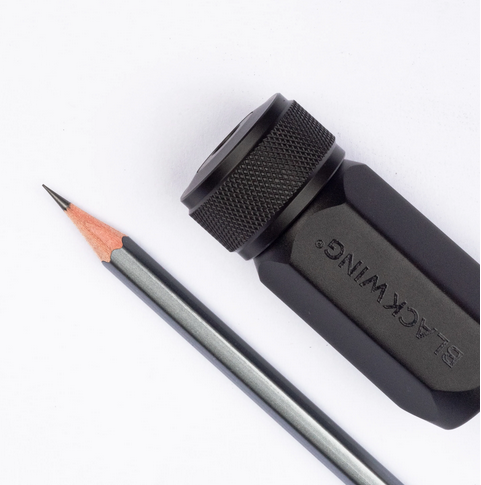
Pencils designed to keep your ideas sharp and your creativity flowing


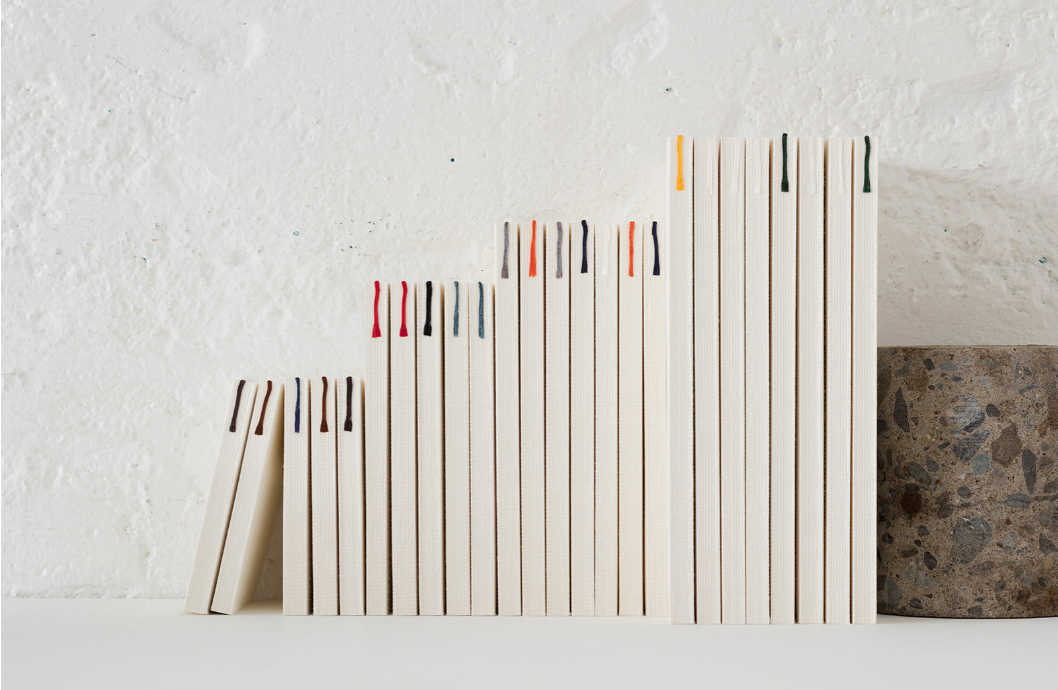
Notebooks:
-
Crokbook Noir -Black Sketchbook 6.75x8.75"
Regular price $14.50 USDRegular priceUnit price / per -
Bauhaus Edition - Hardcover Medium Notebook
Regular price $30.50 USDRegular priceUnit price / per -
Clairefontaine "Forever" 100% Recycled Notebooks
Regular price $8.00 USDRegular priceUnit price / per -
Blank B6 Slim Notebook (3-pack) - Midori
Regular price $13.00 USDRegular priceUnit price / per


Always striving to carry the best paper products and goods for your design process! If you don't find what you're looking for please let us know!